Welcome back!
Today I want to take a dive into the world of foam rolling and share a demonstration video. At the beginning of my fitness journey I often found myself extremely sore the days following a work out. I also noticed that the more weight training, the more my flexibility decreased! When I introduced foam rolling into my routine along with stretching the difference was immediate. Muscle soreness was reduced and my range of motion and flexibility started increasing drastically.
Who Should Roll? Athletes only?
Let’s be clear, rolling is not only for athletes. Most people can gain benefits from foam rolling even if they are not participating in exercise programs. If you find yourself sitting at a desk all day rolling is for you! John Hopkins estimates that over 80% of jobs are now considered sedentary. According to the Canadian Cancer Society, Canadian adults spend 10 hours a day engaged in sedentary activities. YIKES. The long hours of sitting leads to shortening and stiffening of certain muscles and connective tissues. This results in muscle imbalances that cause soreness and predispose you to injuries. Foam rolling will help by stretching the shortened tissues (muscles, tendons, ligaments) and promote range of motion, flexibility and circulation!
How does it work?
Rolling is considered a form of Self-Myofascial Release (SMR). Fascia is referring to the connective tissue that surrounds your muscles. Muscles and fascia make up the myofascial system. By using a firm object, in this case a foam roller, SMR helps stretch the muscles and connective tissue that have become shortened, ridged and tense. A study in the International journal of Sports Physical Therapy found that SMR was effective at increasing joint range of motion and muscle recovery. After rolling, our muscles are more receptive to stretching and movement. It also helps promote blood flow and circulation which facilitates the removal of cellular waste products that build up. By increasing flexability SMR also increases performance through elastic energy potential. The more a muscle is able to stretch, the more force it is able to produce! Harvard Health suggests that these benefits arise from sustained pressure on the muscle signalling the central nervous system to reduce tension and increase muscle length.
I hope this post has given you a little insight as to why rolling is a great addition to your current routine!!
Check out the video below for a rolling demonstration and follow along! This video is only for demonstration, I would suggest rolling for at least 30 second per muscle. You can also view the video on my YouTube Channel.
Current research shows that rolling has benefits for most people. That being said, if you have a chronic illness, health concerns or recent injuries you should consult your physician before engaging in rolling (SMR)
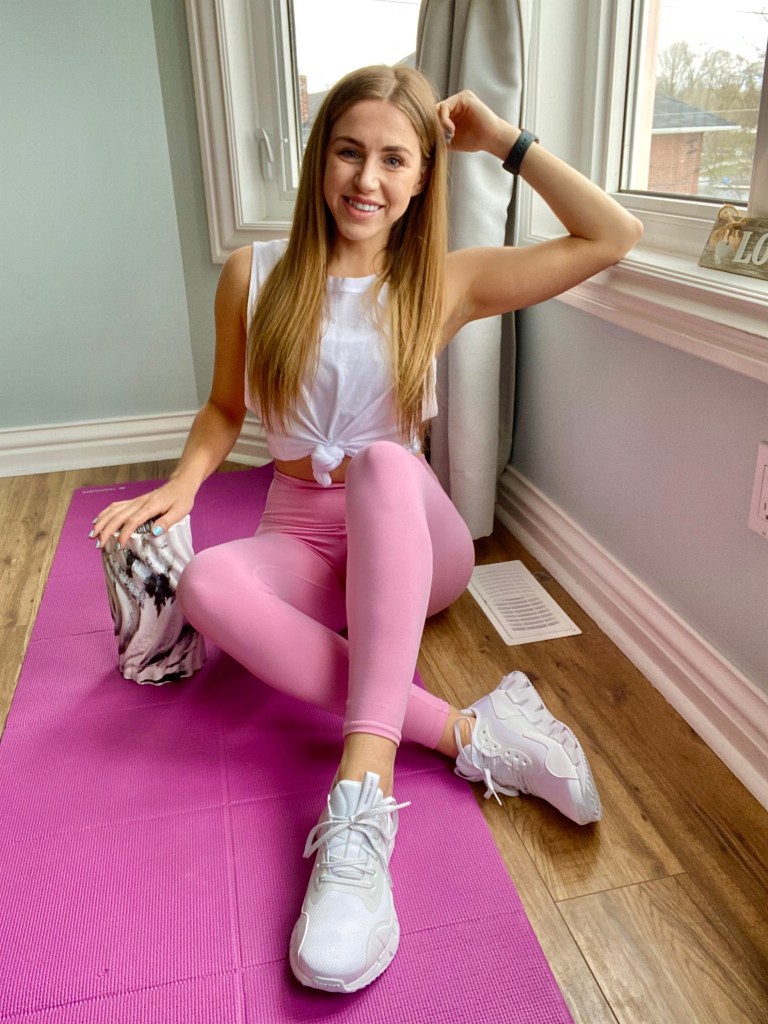
In this video I am using a Lululemon Travel Size Roller. They also have a full size roller. See a list below outlining the benefits of different types of rollers!
Roller Types
- Low Density Foam Roller: These rollers are on the softer side and are good to use in workout classes. If you find firmer rollers too painful I would suggest using a Low Density Roller. Try this one from Amazon.
- Medium Density Roller: If you find low density too soft but firm rollers are still far too intense for you, then this one is just right! Try this one from the Physiotherapy Room.
- Firm Foam Roller: This is your roller if you are looking for a deep, intense rolling experience. Try this dense roller from Amazon.
- Short Foam Roller: These rollers can come in any density, but are mainly useful when you like to travel with your gear! They also come in handy when targeting specific areas. Try this one from Lululemon.
- Grid or Textured Roller: This type is known for really concentrating on those myofascial adhesions or “trigger points” much like a masseuse would during a deep tissue massage! Try this one from Northern Fitness
 Moves By Meghan